


There’s something timeless about watching a kite rise into the sky. If you’ve ever wondered how to fly a kite, you’re not alone—it’s a simple activity that can feel tricky at first but incredibly rewarding once you get it right.
Whether you’re teaching a child, trying it solo, or just looking for a relaxing outdoor hobby, this guide will walk you through everything you need to know.
What You Need Before Flying a Kite
Before jumping into how to fly a kite step by step, make sure you have the right setup.
Basic essentials:
- A kite (diamond or delta shapes are beginner-friendly)
- String or flying line
- An open outdoor space
- Light to moderate wind
Best locations:
- Parks
- Beaches
- Open fields
Avoid areas with trees, buildings, or power lines.
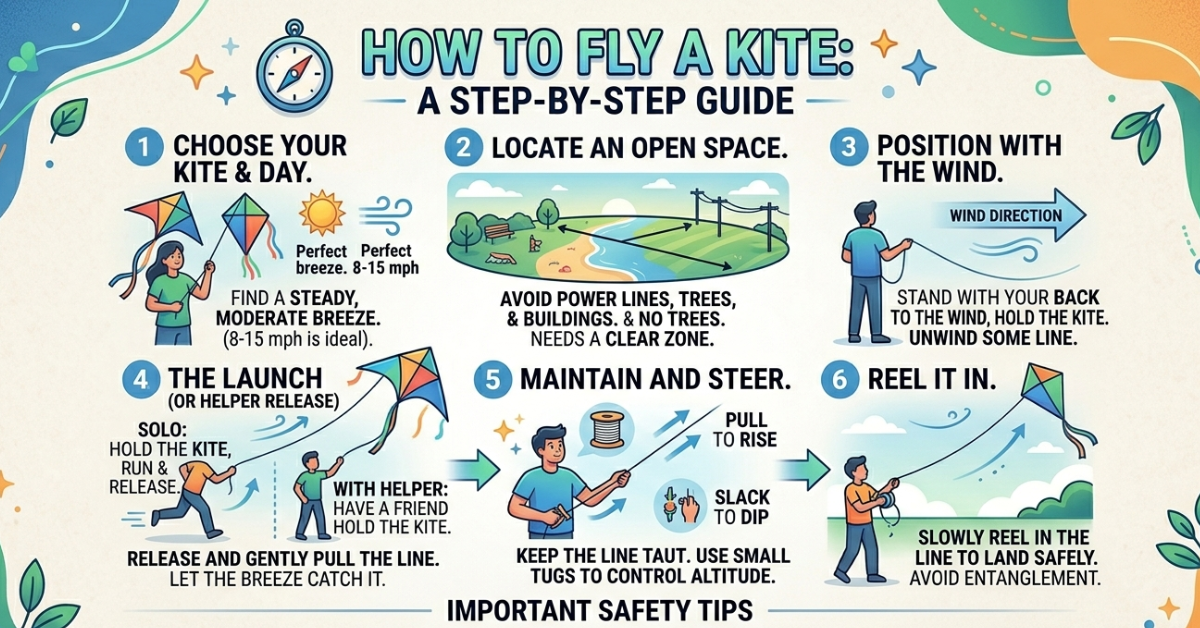
How to Fly a Kite Step by Step
Let’s break it down into simple, easy-to-follow steps.
1. Check the Wind
Kites need wind—but not too much.
- Ideal wind speed: 8–20 km/h (5–12 mph)
- Too little wind → kite won’t lift
- Too much wind → kite becomes unstable
2. Position Yourself Correctly
Stand with your back to the wind.
- Hold the kite upright
- Let the wind catch it from behind
3. Launch the Kite
You can do this in two ways:
With a Helper:
- Ask someone to hold the kite
- Walk back 10–20 meters
- Signal them to release
- Gently pull the string
Alone:
- Place the kite on the ground facing upward
- Pull the string slowly
- Let the wind lift it naturally
This is especially useful if you’re learning how to fly a kite by yourself.
4. Let Out the String
As the kite rises:
- Gradually release more line
- Keep steady tension
- Avoid jerky movements
5. Control and Stabilize
Once the kite is in the air:
- Pull gently to gain height
- Release slightly to maintain balance
- Adjust based on wind changes
How to Fly a Kite for Beginners
If you’re new, keep things simple.
Beginner tips:
- Start with a lightweight kite
- Practice in steady wind
- Don’t overthink—small adjustments work best
Learning how to fly a kite for beginners is all about patience and practice.
How to Fly a Kite for Kids
Flying a kite is a great activity for children.
Make it easier for kids:
- Use smaller kites
- Choose calm, open areas
- Supervise and guide them
Keep instructions simple and fun—kids learn quickly through experience.
How to Fly a Kite at the Beach
Beaches are one of the best places for kite flying.
Why beaches are ideal:
- Strong, steady winds
- Wide open spaces
- Fewer obstacles
Tips for beach flying:
- Stand facing inland with wind from the sea
- Use a slightly stronger kite for higher winds
If you’re curious about how to fly a kite on the beach, it’s often easier than in parks.
How to Fly a Kite in Low Wind or No Wind
Flying in light wind can be tricky—but not impossible.
Tips for low wind:
- Use a lightweight kite
- Run gently to create airflow
- Keep the string shorter
What about no wind?
If there’s absolutely no wind:
- The kite won’t stay airborne
- You’ll need movement (running) to keep it up temporarily
So, while people search how to fly a kite without wind, the truth is you’ll always need at least some airflow.
How to Fly a Kite Really High
Want your kite to reach impressive heights?
Follow these tips:
- Use a longer string
- Choose steady wind conditions
- Keep the line untangled
- Release string gradually
The key is control—not speed.
Common Mistakes to Avoid
Even simple mistakes can keep your kite grounded.
Watch out for:
- Flying in crowded areas
- Pulling too hard on the string
- Ignoring wind direction
- Using damaged or tangled line
Fixing these quickly improves your experience.
FAQs About Flying a Kite
1. How to fly a kite easy for beginners?
Start with light wind, use a simple kite, and follow basic steps like standing with your back to the wind and pulling gently.
2. Can you fly a kite without wind?
Not effectively. You can create temporary lift by running, but wind is essential.
3. How to fly a kite alone?
Launch it from the ground and slowly pull the string to let the wind lift it.
4. What is the best place to fly a kite?
Open areas like beaches, parks, or fields with minimal obstacles.
5. How high can a kite go?
It depends on the string length and conditions, but kites can fly hundreds of meters high.
6. Why won’t my kite fly?
Common reasons include low wind, incorrect positioning, or tangled string.
Conclusion
Learning how to fly a kite is a simple yet rewarding skill that brings a sense of freedom and fun. With the right conditions, a bit of patience, and these easy steps, you’ll have your kite soaring in no time.
Whether you’re flying at the beach, in a park, or teaching someone new, it’s an experience worth trying. So grab a kite, head outside, and let the wind do the rest.