

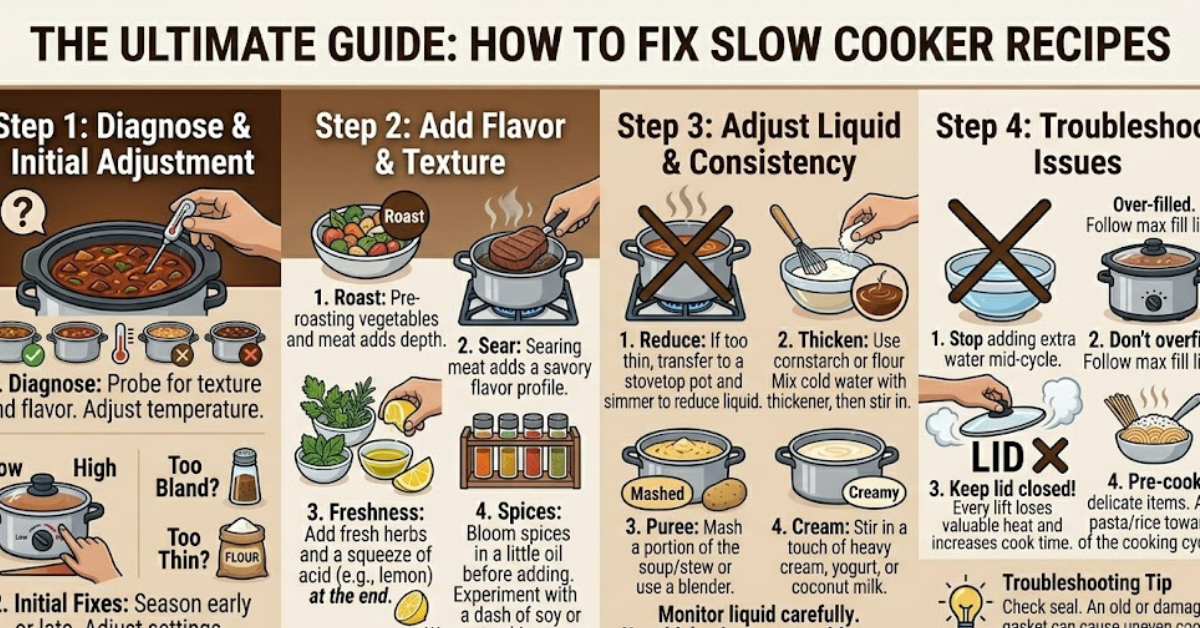

Slow cookers are supposed to make life easier—set it, forget it, and come back to a delicious meal. But sometimes the results don’t quite match expectations. If you’ve ever ended up with bland stew, watery sauce, or overcooked meat, you’re probably wondering how to fix slow cooker recipes without starting from scratch.
The good news is that most slow cooker mistakes are easy to correct. With a few smart adjustments, you can rescue your dish and even improve future meals. This guide breaks down the most common problems and shows you exactly how to fix them.
Why Slow Cooker Recipes Go Wrong
Before diving into solutions, it helps to understand the root causes.
Common issues include:
- Too much liquid
- Overcooking or undercooking
- Weak seasoning
- Wrong ingredient timing
- Using the wrong cut of meat
Once you identify the problem, fixing it becomes much simpler.
How to Fix Slow Cooker Recipes That Are Too Watery
One of the most frequent complaints is a thin, soupy result.
Quick Fixes
- Remove the lid and cook on high for 20–30 minutes to reduce liquid
- Stir in a thickening agent like cornstarch slurry
- Mash some vegetables (like potatoes) to naturally thicken the dish
Prevention Tips
- Use less liquid than stovetop recipes
- Avoid adding too much broth early on
- Keep the lid closed to prevent excess condensation
Mastering this step is key when learning how to fix slow cooker recipes effectively.
How to Fix Bland Slow Cooker Meals
Slow cooking can sometimes dull flavors over time.
Easy Flavor Boosters
- Add salt gradually at the end
- Stir in fresh herbs like cilantro or parsley
- Use acidic ingredients such as lemon juice or vinegar
- Add spices late in the cooking process for stronger impact
Pro Tip
Layer your seasoning—some at the beginning, some during, and some at the end.
How to Fix Overcooked Meat in Slow Cooker
Overcooked meat can turn dry or stringy, especially lean cuts.
What You Can Do
- Add warm broth or sauce to restore moisture
- Shred the meat and mix it with juices
- Turn it into a different dish like tacos or sandwiches
Prevention Tips
- Use tougher cuts like chuck roast or thighs
- Avoid cooking too long on high heat
How to Fix Undercooked Food
Sometimes meals just don’t cook long enough.
Quick Solutions
- Turn the heat to high and cook longer
- Cut ingredients into smaller pieces for faster cooking
- Ensure the slow cooker is properly preheated
Undercooking is easier to fix than overcooking, so don’t panic.
How to Fix Too Salty or Over-Seasoned Dishes
It happens to everyone—too much salt can overpower everything.
Fix It Fast
- Add unsalted broth or water to dilute
- Toss in potatoes or rice to absorb excess salt
- Balance with a touch of sugar or acid
These tricks can quickly bring your dish back into balance.
How to Fix Mushy Vegetables
Vegetables can lose texture if cooked too long.
Solutions
- Add fresh vegetables toward the end of cooking
- Remove overly soft veggies and replace if needed
- Use firmer vegetables like carrots or potatoes for long cooking
Timing is everything when it comes to vegetables in slow cookers.
Best Practices to Avoid Future Problems
Once you know how to fix slow cooker recipes, it’s even better to prevent issues altogether.
Follow These Guidelines
- Don’t overfill the slow cooker
- Keep the lid closed during cooking
- Use the right heat setting (low for long cooking, high for shorter)
- Brown meat before adding for deeper flavor
- Adjust liquid levels carefully
Consistency comes from understanding how your slow cooker behaves.
FAQs
Can I fix a slow cooker recipe after it’s done?
Yes, most issues like texture and flavor can be adjusted even after cooking.
Why does my slow cooker food taste bland?
Because flavors mellow over time. Adding seasoning at the end helps.
How do I thicken slow cooker meals quickly?
Use cornstarch slurry, flour paste, or reduce liquid by cooking uncovered.
Is it better to cook on low or high?
Low is generally better for tender, flavorful results.
Can I open the lid while cooking?
It’s best to avoid it, as heat escapes and slows down cooking.
Conclusion
Learning how to fix slow cooker recipes can turn kitchen frustration into confidence. Whether your dish is too watery, bland, or overcooked, simple adjustments can save the meal and improve the outcome.
The key is understanding what went wrong and applying the right fix at the right time. With practice, you’ll not only rescue meals—you’ll start getting them right from the beginning.