

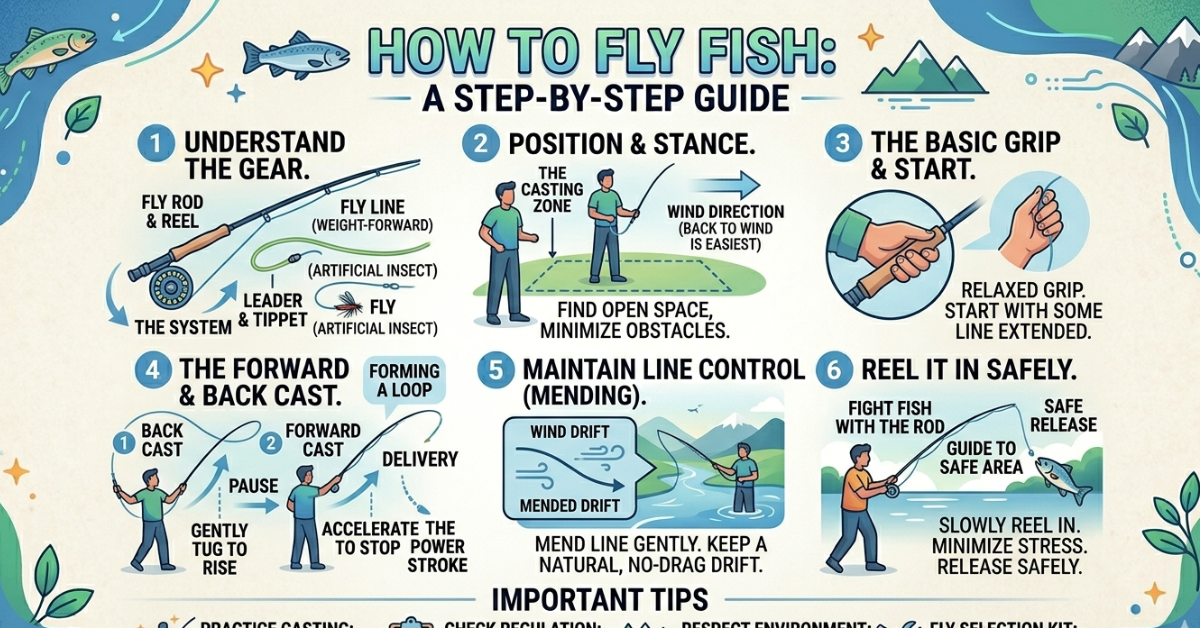

Standing in a quiet river with a rod in hand, casting a line that dances across the water—fly fishing is as much an art as it is a skill. If you’ve been wondering how to fly fish, you’re in the right place.
This guide breaks everything down into simple steps, whether you’re just starting out or looking to improve your technique. By the end, you’ll have a clear understanding of how to get started and enjoy the experience.
What Is Fly Fishing?
Before diving into how to fly fish for beginners, it helps to understand what makes it different.
Unlike traditional fishing:
- Fly fishing uses a lightweight lure (called a fly)
- The line carries the weight, not the bait
- Casting technique is more important than strength
It’s designed to mimic insects landing on water, making it especially effective for species like trout.
Essential Gear for Fly Fishing
You don’t need a ton of equipment to start, but the basics matter.
Must-have gear:
- Fly rod and reel
- Fly line
- Leader and tippet
- Artificial flies
- Waders (optional but helpful)
For beginners, it’s best to keep things simple and focus on learning the fundamentals.
How to Fly Fish Step by Step
Let’s break down the core process of learning how to fly fish.
1. Set Up Your Gear
- Attach the fly line to the reel
- Add leader and tippet
- Tie on your chosen fly
2. Learn the Basic Cast
The most important skill is the fly fish cast.
Simple casting steps:
- Hold the rod at about 10 o’clock
- Flick it back smoothly
- Pause briefly
- Cast forward to 2 o’clock
Key tip:
- Let the line do the work—don’t force it
3. Present the Fly
Your goal is to make the fly look natural.
- Let it drift with the current
- Avoid dragging the line
- Keep movements subtle
4. Watch for Bites
Fish often strike quickly.
- Look for small splashes or movement
- Gently lift the rod to set the hook
How to Fly Fish for Trout
Trout are one of the most popular targets.
Tips for trout fishing:
- Fish in cool, clear water
- Focus on early morning or evening
- Match your fly to local insects
If you’re exploring how to fly fish for trout beginners, start in small streams or calm rivers.
How to Fly Fish for Bass
Bass require a slightly different approach.
Key differences:
- Use larger flies (streamers or poppers)
- Cast near structures like logs or weeds
- Retrieve the fly with short pulls
This makes bass fishing more active and aggressive compared to trout.
How to Fly Fish in Lakes
Lakes offer a different challenge compared to rivers.
Tips for lake fishing:
- Cast near the shoreline or drop-offs
- Use slow retrieves
- Experiment with depth
Whether you’re learning how to fly fish a lake or exploring still waters, patience is key.
Fly Fishing Techniques: Nymphs vs Streamers
Understanding fly types can improve your success.
1. Nymph Fishing
- Mimics underwater insects
- Best for deeper water
- Requires slow, natural drift
2. Streamer Fishing
- Mimics small fish
- Use active retrieval
- Great for larger fish
Knowing how to fly fish with nymphs or streamers gives you flexibility in different conditions.
Can You Fly Fish With a Spinning Rod?
Technically, yes—but it’s not ideal.
Here’s why:
- Spinning rods aren’t designed for fly casting
- You’ll need special rigs or adaptations
If you’re serious about learning, a dedicated fly rod is worth it.
Tips to Improve Your Fly Fishing Skills
Want to get better faster? Keep these in mind:
- Practice casting on land first
- Observe water movement
- Stay patient—results take time
- Learn from each outing
Improvement comes with consistency, not speed.
FAQs About Fly Fishing
1. How to fly fish for beginners?
Start with basic gear, learn simple casting, and practice in calm waters.
2. Is fly fishing hard to learn?
It can feel tricky at first, but with practice, it becomes natural.
3. What fish can you catch with fly fishing?
Common species include trout, bass, and even some saltwater fish.
4. How long does it take to learn fly fishing?
You can learn the basics in a day, but mastering it takes time.
5. Do you need expensive gear to start?
No, beginner kits are affordable and work well.
6. Can you fly fish in lakes?
Yes, and it’s a great way to target larger fish with the right technique.
Conclusion
Learning how to fly fish opens the door to a relaxing and rewarding outdoor experience. From mastering your cast to understanding fish behavior, every step adds to the adventure.
Start simple, practice regularly, and enjoy the process. The more time you spend on the water, the more natural it will feel—and before long, you’ll be casting with confidence.