

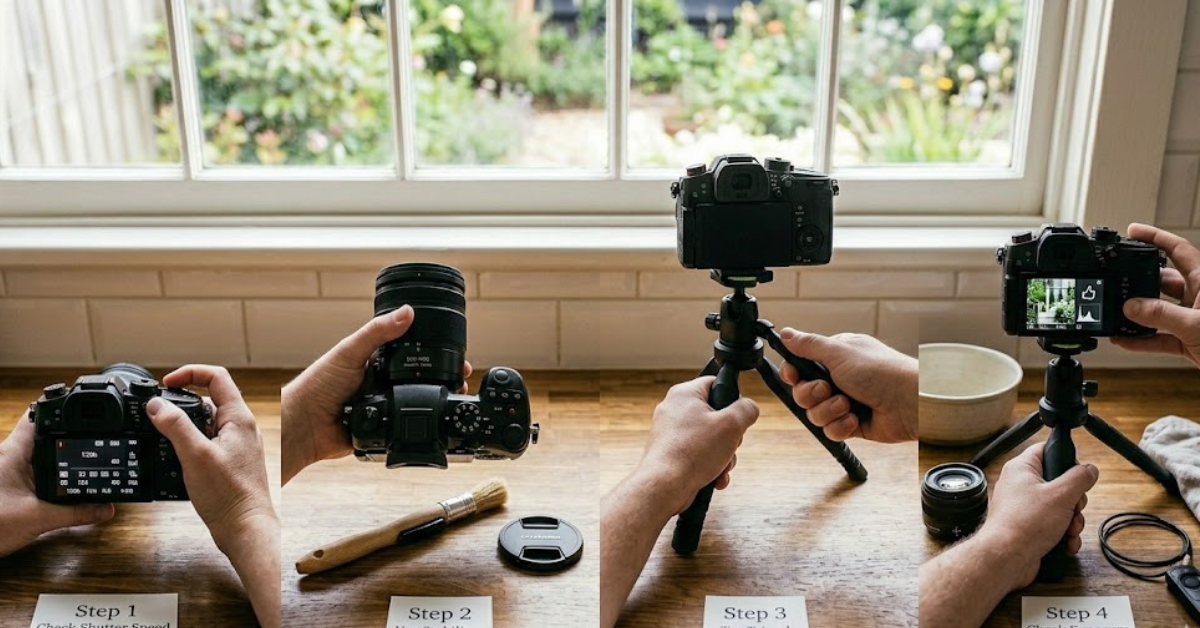

You line up the perfect shot, press the shutter, and then—blur. If you’ve been struggling with camera shake, you’re not alone. Learning how to fix shaky hands photography is one of the biggest steps toward capturing sharp, professional-looking images.
The good news? You don’t need expensive gear or years of experience to fix it. With a few practical techniques and smart camera settings, you can dramatically improve your photo sharpness starting today.
What Causes Shaky Hands in Photography?
Before fixing the problem, it helps to understand what’s causing it.
Common Reasons for Camera Shake
- Slow shutter speed
- Poor handholding technique
- Low light conditions
- Fatigue or natural hand tremors
- Using heavy or unbalanced equipment
Even small movements can cause blur, especially when your camera is set to capture more light.
How to Fix Shaky Hands Photography with Better Technique
Sometimes, the simplest fix is how you hold your camera.
Proper Hand Position
- Use both hands: one on the grip, one supporting the lens
- Keep your elbows close to your body
- Stand with your feet shoulder-width apart
Breathing Control
- Take a breath and gently exhale before pressing the shutter
- Avoid snapping the button quickly—press it smoothly
These small adjustments can instantly reduce motion blur.
Use Faster Shutter Speeds for Sharper Photos
Shutter speed plays a huge role in image sharpness.
Recommended Settings
- Use at least 1/60s for general handheld shots
- For zoom lenses, match shutter speed to focal length (e.g., 1/200s for 200mm)
Why It Works
A faster shutter speed freezes motion, reducing the effect of shaky hands.
If you’re serious about how to fix shaky hands photography, mastering shutter speed is essential.
Turn On Image Stabilization
Most modern cameras and lenses include stabilization features.
Types of Stabilization
- Optical Image Stabilization (OIS)
- In-body image stabilization (IBIS)
When to Use It
- Low light conditions
- Handheld shooting
- Telephoto lenses
This feature compensates for small movements and can make a big difference.
Improve Stability with Simple Support
You don’t always need a tripod—sometimes small adjustments are enough.
Easy Ways to Stabilize Yourself
- Lean against a wall or tree
- Rest your camera on a solid surface
- Sit or kneel for better balance
These techniques reduce movement and help you stay steady.
Use a Tripod or Monopod
For maximum stability, nothing beats a solid support system.
When to Use a Tripod
- Night photography
- Long exposures
- Landscape shots
Benefits
- Eliminates camera shake
- Allows slower shutter speeds
- Improves composition control
A monopod is a lighter alternative if you need mobility.
Adjust Your Camera Settings
Your camera settings can either help or hurt your stability.
Key Adjustments
- Increase ISO in low light to allow faster shutter speed
- Use burst mode to capture multiple frames
- Enable timer or remote shutter to avoid pressing the button
These tweaks can significantly reduce blur.
Strengthen Your Hands and Control
If shaky hands are a recurring issue, physical control matters too.
Simple Exercises
- Practice holding your camera steady for longer periods
- Use grip strength tools
- Take breaks during long shoots
Even small improvements in control can enhance your results.
Post-Processing Can Help (But Not Fix Everything)
Editing tools can reduce minor blur, but they’re not magic.
What You Can Do
- Use sharpening tools in editing software
- Slightly adjust clarity and contrast
Limitations
Severe blur caused by camera shake is difficult to fix after the fact, so prevention is always better.
Quick Tips to Remember
If you want a fast checklist for how to fix shaky hands photography, keep these in mind:
- Use a faster shutter speed
- Hold your camera properly
- Turn on stabilization
- Use support when possible
- Adjust ISO for better exposure
FAQs
1. Why are my photos blurry even with a steady hand?
It could be due to a slow shutter speed or incorrect focus, not just hand movement.
2. What is the best shutter speed to avoid blur?
A safe starting point is 1/60s, but faster speeds are better for moving subjects or zoom lenses.
3. Do I need a tripod for sharp photos?
Not always, but it helps significantly in low light or long exposure situations.
4. Can image stabilization completely fix shaky hands?
It helps a lot, but it’s not a complete replacement for good technique.
5. How can I practice steady photography?
Take multiple shots, experiment with settings, and focus on improving your grip and posture.
Conclusion
Mastering how to fix shaky hands photography doesn’t require expensive upgrades—it’s about technique, awareness, and a few smart adjustments. From improving your grip to using faster shutter speeds and stabilization tools, small changes can lead to noticeably sharper images.
To recap:
- Focus on proper handholding technique
- Use faster shutter speeds whenever possible
- Take advantage of stabilization features
- Use support like tripods when needed
With a bit of practice, you’ll see your photos become clearer, sharper, and more professional. Keep experimenting, and don’t be afraid to try different methods until you find what works best for you.