

Few dishes feel as impressive as a perfectly roasted prime rib. If you’ve ever wondered how to cook prime rib without overcooking it or drying it out, you’re not alone. This cut of beef is luxurious, flavorful, and surprisingly easy to master once you understand the basics.
In this guide, you’ll learn everything from choosing the right cut to cooking it to perfection, whether you’re using an oven, grill, or smoker. Let’s break it down step by step so you can confidently serve a restaurant-quality roast at home.
What Is Prime Rib?
Prime rib, also known as a standing rib roast, comes from the rib section of the cow. It’s known for:
- Rich marbling (which adds flavor and tenderness)
- Juicy texture
- Bold, beefy taste
It’s often served during holidays or special occasions, but you can absolutely make it at home with the right approach.
How to Choose the Best Prime Rib
Before learning how to cook prime rib roast, start with a quality cut.
Look for These Key Features:
- Good marbling: Thin streaks of fat throughout the meat
- Bone-in or boneless: Bone-in adds flavor; boneless is easier to carve
- Size: Plan for about 1 pound per person
Grades Matter:
- Prime grade: Highest quality, most marbling
- Choice grade: Great balance of quality and price
Preparing Prime Rib Before Cooking
Preparation makes a huge difference in flavor and texture.
1. Bring It to Room Temperature
Take the roast out of the fridge 2–3 hours before cooking. This ensures even cooking.
2. Season Generously
Keep it simple:
- Salt
- Black pepper
- Garlic
- Fresh herbs like rosemary or thyme
3. Optional Dry Brining
Salt the roast and leave it uncovered in the fridge overnight for deeper flavor.
How to Cook Prime Rib in Oven
This is the most popular and reliable method.
Step-by-Step Instructions:
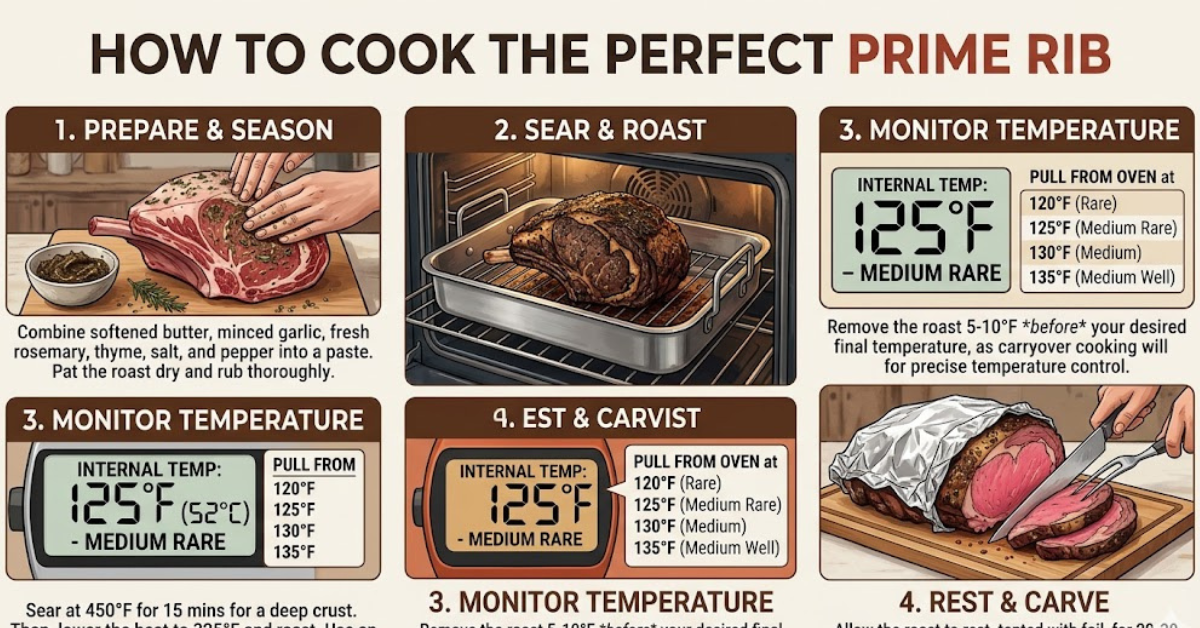
- Preheat your oven to 450°F (232°C)
- Place the roast on a rack in a roasting pan
- Roast at high heat for 15–20 minutes to create a crust
- Lower the temperature to 325°F (163°C)
- Continue cooking until desired doneness
Internal Temperature Guide:
- Rare: 120–125°F
- Medium rare: 130–135°F
- Medium: 135–145°F
Important Tip:
Remove the roast 5–10°F before your target temperature. It will continue cooking while resting.
How to Cook Prime Rib Medium Rare
Medium rare is the gold standard for this cut.
Key Tips:
- Use a meat thermometer
- Aim for 130–135°F internal temperature
- Let it rest for at least 20 minutes before slicing
This keeps the meat juicy and tender.
Alternative Cooking Methods
How to Cook Prime Rib on the Grill
Great for adding a smoky flavor:
- Sear over high heat
- Move to indirect heat
- Cook slowly until done
How to Cook Prime Rib on a Smoker
Perfect for deep flavor:
- Maintain a steady low temperature (225–250°F)
- Use wood like oak or hickory
- Cook until internal temperature is reached
How to Cook Prime Rib Steak in Pan
For individual portions:
- Sear in a hot skillet
- Finish in the oven
- Baste with butter and herbs
Resting and Carving the Roast
Resting is just as important as cooking.
Why Resting Matters:
- Locks in juices
- Makes slicing easier
- Improves flavor
How to Carve:
- Remove bones (if bone-in)
- Slice against the grain
- Serve thick or thin based on preference
Common Mistakes to Avoid
Even experienced cooks can slip up. Avoid these pitfalls:
- Skipping the thermometer
- Cutting too soon after cooking
- Overcooking due to high heat
- Under-seasoning
Pro Tips for Perfect Results
- Use a rack for even airflow
- Add butter or herb crust for extra flavor
- Keep the oven door closed as much as possible
- Let the meat rest properly
FAQs
What is the best temperature for cooking prime rib?
A low and slow approach at 325°F works best after an initial high-heat sear.
How long does it take to cook prime rib?
It typically takes about 15–20 minutes per pound, depending on the temperature and doneness.
Should I cook prime rib covered or uncovered?
Cook it uncovered to develop a flavorful crust.
Can I cook prime rib ahead of time?
Yes, you can partially cook it and reheat gently, but it’s best served fresh.
How do I know when my prime rib is done?
Use a meat thermometer for accuracy rather than relying on time alone.
Conclusion
Learning how to cook prime rib doesn’t have to be intimidating. With the right cut, proper seasoning, and careful temperature control, you can create a tender, juicy roast that rivals any steakhouse.
Focus on the basics: quality meat, simple seasoning, and patience. Once you master those, you’ll find yourself coming back to this classic dish again and again.