


Ever looked at a tape measure and felt completely lost? You’re not alone. Learning how to read a tape measure might seem tricky at first, especially with all those lines and numbers—but once you understand the basics, it becomes second nature.
In this guide, you’ll learn exactly how tape measures work, how to read inches and metric units, and how to quickly identify fractions without confusion.
Understanding the Basics of a Tape Measure
Before diving into details, let’s break down what you’re actually looking at.
Key Features
- Numbers represent inches or centimeters
- Long lines mark whole units (like 1 inch or 1 cm)
- Shorter lines represent fractions or smaller measurements
Most tape measures include both imperial (inches/feet) and metric (cm/mm) systems.
How to Read a Tape Measure in Inches
The imperial system is the most common, especially in construction and DIY projects.
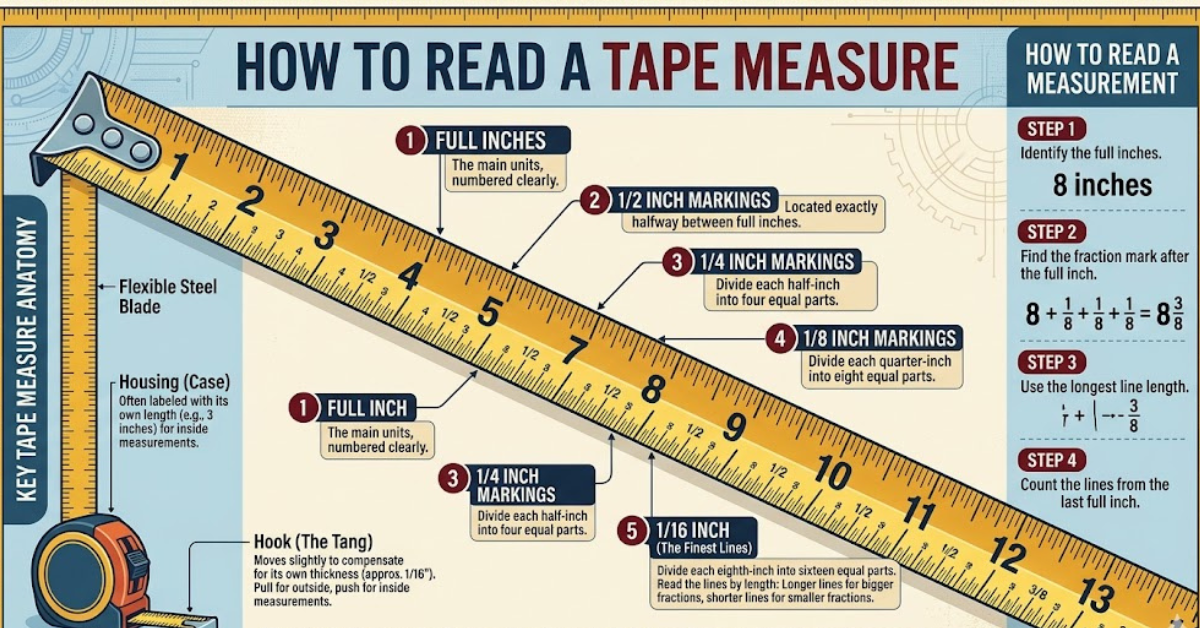
Main Inch Markings
- Large numbers = full inches
- Longest lines = 1 inch marks
- Medium lines = 1/2 inch
- Smaller lines = 1/4 inch
- Even smaller = 1/8 inch
- Smallest lines = 1/16 inch
Example
If you see a mark between 2 and 3 inches that’s halfway, it’s 2 1/2 inches.
How to Read a Tape Measure in Fractions
Understanding fractions is key to accurate measurements.
Common Fraction Marks
- 1/2 (half)
- 1/4 (quarter)
- 1/8
- 1/16
Easy Way to Read Fractions
- Find the nearest whole number
- Count the lines after it
- Match the line size to the fraction
Quick Tip
The smaller the line, the smaller the fraction.
How to Read a Tape Measure in 16ths and 32nds
Some tape measures go even further with precision.
16ths
Each inch is divided into 16 equal parts.
- Count each small line as 1/16
- Example: 5 small lines = 5/16
32nds
Even finer measurements divide each inch into 32 parts.
- These lines are very small and close together
- Used for detailed work like woodworking or engineering
How to Read a Tape Measure Feet and Inches
Tape measures also show feet for longer distances.
How It Works
- Every 12 inches = 1 foot
- Often marked with a special symbol (like 1F or 1’)
Example
If the tape shows 24 inches, that equals:
- 2 feet (because 12 + 12 = 24)
How to Read a Tape Measure in CM and MM
The metric side is often easier because it uses base-10.
Centimeters (cm)
- Each numbered mark = 1 cm
- There are 10 millimeters in 1 cm
Millimeters (mm)
- Small lines between cm marks = 1 mm each
Example
If you see 5 small lines after 3 cm, it equals 3.5 cm or 35 mm.
How to Read a Tape Measure Easy (Beginner Method)
If you’re just starting out, keep it simple.
Step-by-Step
- Identify the unit (inches or cm)
- Locate the nearest number
- Count the lines after it
- Match the line size to its value
Beginner Tip
Start with inches and half inches before moving to smaller fractions.
Cheat Sheet: Quick Reference Tips
Here’s a simple way to remember key measurements:
- Longest line = whole number
- Second longest = 1/2
- Medium = 1/4
- Smaller = 1/8
- Smallest = 1/16
Practice spotting these patterns, and reading measurements will become much faster.
Common Mistakes to Avoid
Even experienced users make small errors.
Watch Out For
- Starting from the wrong end of the tape
- Misreading small fraction lines
- Mixing metric and imperial units
- Not keeping the tape straight
Pro Tip
Always double-check your measurement before cutting or building.
Practical Uses of Tape Measure Skills
Knowing how to read measurements is useful in many situations.
Everyday Applications
- Home improvement projects
- Furniture placement
- Tailoring and sewing
- School assignments
Once you master it, you’ll use this skill more often than you think.
FAQs
How to read a tape measure for dummies?
Start by focusing on whole numbers and half inches. Ignore smaller fractions until you’re comfortable.
How to read a tape measure in inches?
Look at the large numbers for inches and count smaller lines for fractions like 1/2 or 1/4.
How to read a tape measure in mm?
Each small line represents 1 millimeter, and 10 mm make 1 centimeter.
What does 32nds mean on a tape measure?
It means each inch is divided into 32 tiny parts for very precise measurements.
How to read a tape measure properly?
Always start at zero, keep the tape straight, and carefully match the line to its correct fraction or unit.
Conclusion
Learning how to read a tape measure doesn’t have to be complicated. Once you understand how the lines represent inches, fractions, and metric units, everything starts to click.
Begin with the basics, practice regularly, and gradually move to more detailed measurements like 16ths or 32nds. With a little patience, you’ll go from guessing measurements to reading them with confidence and accuracy.