

There’s something timeless about folding a simple sheet of paper into a flying machine. Whether you’re a kid experimenting for the first time or an adult chasing nostalgia, learning how to make a paper airplane is both fun and surprisingly rewarding.
In this guide, you’ll discover easy folding techniques, tips to improve flight distance, and creative variations—from fast jets to smooth gliders. Let’s get started.
Why Paper Airplanes Still Matter
Paper airplanes aren’t just toys—they’re a simple introduction to basic aerodynamics. With a few folds, you can explore concepts like lift, drag, and balance.
Plus, they’re:
- Affordable (just paper!)
- Great for kids and adults alike
- Perfect for quick indoor or outdoor fun
Materials You’ll Need
Before diving into the folding process, gather the basics:
- 1 sheet of A4 or letter-size paper
- A flat surface
- Optional: ruler for sharp creases
That’s it—no special tools required.
How to Make a Paper Airplane Step by Step
This classic design is perfect if you’re looking for an easy and reliable method.
Step-by-Step Instructions:
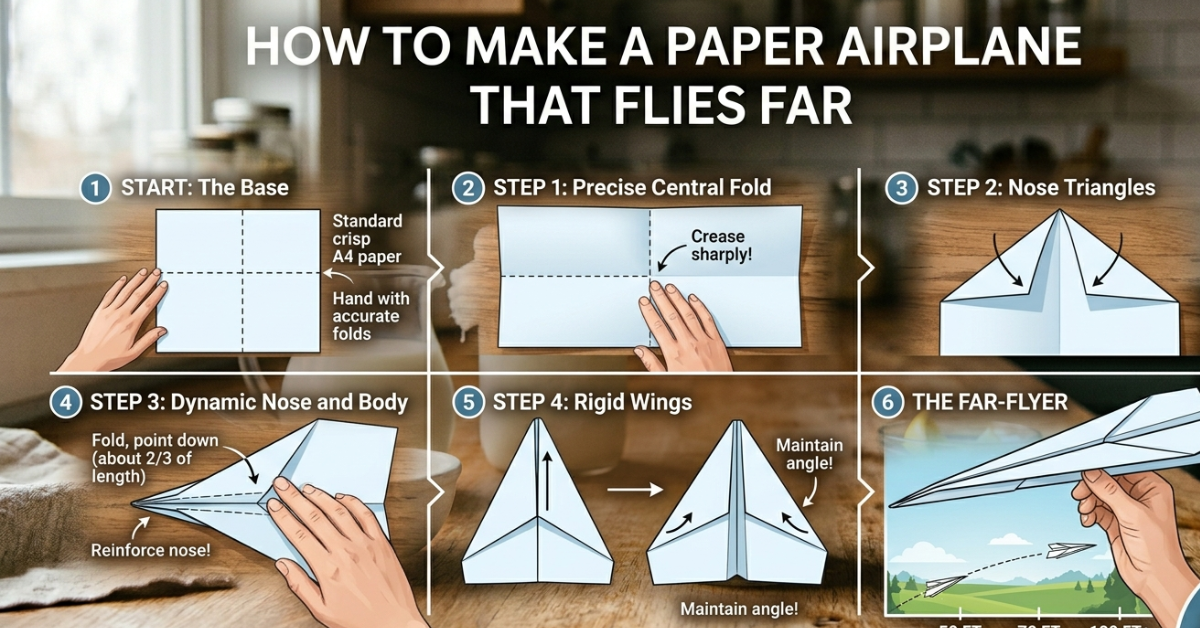
- Fold the paper in half lengthwise
Crease it well, then unfold. This creates a center guideline. - Fold the top corners to the center
Bring both top edges down so they meet at the middle crease. - Fold the new top edges inward again
This sharpens the nose and improves aerodynamics. - Fold the plane in half
Bring both sides together along the center line. - Create the wings
Fold each side down to form wings. Keep them even. - Adjust and test
Slightly bend the wings upward for better lift.
This method works great if you’re searching for how to make a paper airplane easy and fast.
How to Make a Paper Airplane That Flies Far
If distance is your goal, small adjustments can make a big difference.
Tips for Long Flights:
- Use heavier paper for stability
- Make sharp, clean folds
- Keep the wings symmetrical
- Add a slight upward tilt at the back
These tweaks help if you want to learn how to make a paper airplane that flies far and straight.
How to Make a Paper Airplane Jet
Want something faster and sleeker? Try a jet-style design.
Key Features:
- Narrow body
- Sharp nose
- Smaller wings
Jet designs are ideal for speed and are perfect for those curious about how to make a paper airplane jet.
How to Make a Paper Airplane for Kids
For younger beginners, simplicity is key.
Keep It Easy:
- Use fewer folds
- Make larger wings
- Avoid complex designs
This approach ensures kids can enjoy the process without frustration.
Advanced Designs to Try
Once you’ve mastered the basics, experiment with creative variations.
Glider
- Wide wings
- Slow, smooth flight
- Great for indoor use
Looping Plane
- Slight upward wing bends
- Throws result in loops
Spinning Plane
- Uneven wing adjustments
- Creates a fun spinning motion
These are fun ways to explore how to make a paper airplane that flies in different styles.
How to Make a Paper Airplane Fly Farther
Want to improve performance? Focus on technique.
Flight Tips:
- Throw gently, not forcefully
- Aim slightly upward
- Test and adjust wing angles
Even small changes can dramatically improve flight distance.
Common Mistakes to Avoid
- Uneven wings (causes imbalance)
- Loose folds (reduces stability)
- Throwing too hard (leads to crashing)
Keeping things precise and controlled makes all the difference.
FAQs
What type of paper works best?
Standard printer paper is ideal. Heavier paper can improve distance but may require stronger throws.
Why does my plane keep diving?
The nose may be too heavy. Try adjusting the wings slightly upward.
Can I make a plane that flies forever?
No plane flies forever, but glider designs can stay in the air longer with the right technique.
How can I make it go farther?
Focus on symmetry, clean folds, and gentle throws.
Are paper airplanes good for kids?
Absolutely. They’re a fun way to develop creativity and basic problem-solving skills.
Conclusion
Now you know exactly how to make a paper airplane, from simple beginner designs to more advanced variations. With just a piece of paper and a few careful folds, you can create something that soars across the room—or even farther.
The real fun begins when you start experimenting. Try different designs, tweak your folds, and see what works best. Who knows? You might just create your own high-flying masterpiece.