


There’s something magical about turning just flour and water into a living culture that can bake incredible bread. If you’ve ever wondered how to make sourdough starter, you’re in the right place.
This guide breaks everything down into simple, manageable steps. Whether you’re a complete beginner or just want better results, you’ll learn how to build, maintain, and improve your starter with confidence.
What Is a Sourdough Starter?
A sourdough starter is a mixture of flour and water that captures natural wild yeast and beneficial bacteria from the environment. Over time, this mixture ferments and becomes active enough to leaven bread.
Unlike commercial yeast, it develops flavor, texture, and character—making your bread truly unique.
Ingredients and Tools You’ll Need
Before diving into the process, gather the essentials:
Ingredients:
- Flour (all-purpose or bread flour)
- Water (preferably filtered)
Tools:
- Glass jar or container
- Spoon or spatula
- Kitchen scale (optional but helpful)
You can still proceed if you’re figuring out how to make sourdough starter without a scale—simple measurements work fine.
How to Make Sourdough Starter Step by Step
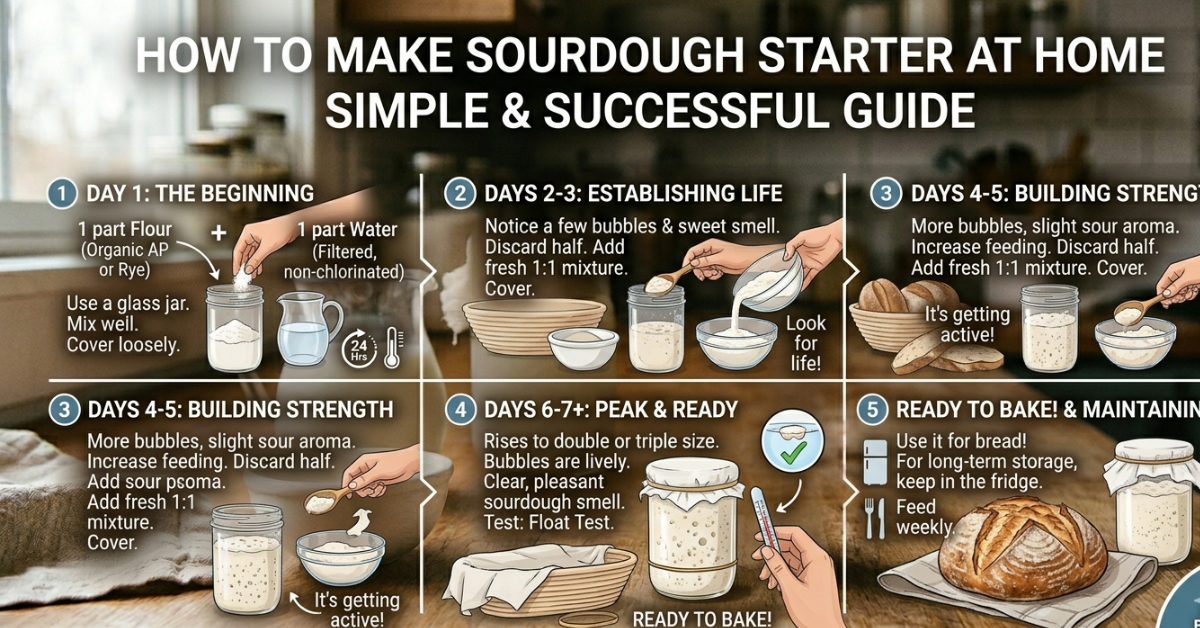
This is a basic 7-day method that works well for beginners.
Day 1: Mix the Base
- Combine ½ cup flour with ¼ cup water
- Stir until smooth
- Cover loosely and let it sit at room temperature
Day 2: First Feeding
- You may see a few bubbles
- Add another ½ cup flour and ¼ cup water
- Mix and cover again
Day 3–5: Build Activity
- Discard half the mixture daily
- Feed with equal parts flour and water
- Bubbles and a slight sour smell will develop
Day 6–7: Ready to Use
- The starter should double in size within hours of feeding
- It’s now active enough for baking
This process is ideal if you’re learning how to make sourdough starter from scratch.
Best Flour Choices for Better Results
Different flours affect how your starter behaves.
All-Purpose Flour
Great for beginners and easy to find—perfect if you’re exploring how to make sourdough starter with all purpose flour.
Bread Flour
Higher protein content helps create a stronger starter.
Whole Wheat or Rye
Speeds up fermentation and adds more flavor.
Tips to Make Your Starter Stronger and More Active
A healthy starter should bubble, rise, and smell pleasantly tangy.
To improve strength:
- Feed consistently at the same time each day
- Keep it in a warm spot (around 24–27°C)
- Use fresh flour and clean water
These steps help if you’re trying to understand how to make it more active or resilient.
How to Adjust Flavor: More or Less Sour
Sourdough flavor can be customized.
To Make It More Sour:
- Let it ferment longer between feedings
- Store it slightly cooler
- Use whole grain flour
To Make It Less Sour:
- Feed more frequently
- Keep it warmer
- Use lighter flours
Balancing these factors helps control acidity and taste.
Common Variations to Try
Using Bread Flour
This creates a stronger gluten structure, ideal for baking bread.
Gluten-Free Option
Use gluten-free flour blends or rice flour and follow the same feeding process.
Faster Fermentation
To speed things up:
- Keep the environment warm
- Feed slightly more often
Common Mistakes to Avoid
- Skipping feedings: Leads to weak or inactive starter
- Using chlorinated water: Can slow fermentation
- Sealing the jar tightly: Needs airflow
- Not discarding enough: Can cause imbalance
How to Use Your Starter for Bread
Once active, your starter is ready for baking.
Basic Tips:
- Use it when it’s bubbly and doubled in size
- Perform a “float test” (a small amount floats in water)
- Mix into dough as your natural leavening agent
This is essential for anyone learning how to prepare a starter for bread-making.
FAQs
How long does it take to make a starter?
Usually 5–7 days, though some may take longer depending on temperature and conditions.
Can I add yeast to speed it up?
While possible, traditional methods rely on wild yeast for authentic flavor.
Why isn’t my starter bubbling?
It may be too cold, underfed, or using inactive flour. Try adjusting feeding and temperature.
Can I store it in the fridge?
Yes, once established. Feed it weekly if refrigerated.
What should it smell like?
A healthy starter smells slightly tangy, like yogurt or mild vinegar—not unpleasant.
Conclusion
Now you know exactly how to make sourdough starter from scratch using simple ingredients and a bit of patience. While the process takes a few days, the reward is a living culture that can transform your baking.
The key is consistency—regular feeding, proper temperature, and a little observation go a long way. Once your starter is thriving, you’ll unlock the door to homemade sourdough bread with rich flavor and texture.
Ready to take the next step? Try baking your first loaf and experience the difference a homemade starter can make.